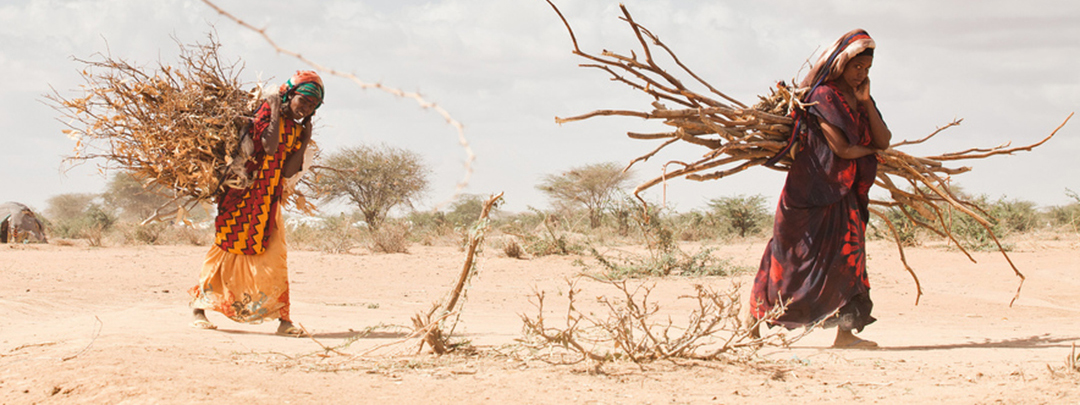
Empowering Women on the Front Lines of Climate Change
Publisher: UN Environment
Date: 2019
Topics: Climate Change, Conflict Prevention, Cooperation, Gender, Land
On any given morning in the locality of Al-Rahad in Sudan, women like Hawa Abdullah, dressed in bright colours, can be seen turning up the earth of their land or scattering seeds on their tractors.
While the scene is age-old, the number of women farmers—and those performing traditionally male roles—has grown out of the impacts of climate change and environmental degradation. Al Rahad, in the North Kordofan State, like other regions in the Sahel, has suffered from increasing temperatures, uneven distribution and variability of rainfall, and drought. In turn, this has affected the livelihoods of pastoralists and farmers, with men migrating to the capital of Khartoum or other cities in search of employment.
In turn, women—whose traditional roles have been caring for children and performing household chores—have stepped into the role of providers. By renting fields for their livestock and crops, they have been able to sell goods at the market and earn a small income.