Lessons Learned from the Peace Centers for Climate and Social Resilience
Publisher: Chemonics International
Author(s): Jeffrey Stark, Katsuaki Terasawa, and Chalachew N. Agonafir
Date: 2019
Topics: Climate Change, Conflict Prevention, Gender, Governance, Humanitarian Assistance, Land, Renewable Resources
Countries: Ethiopia
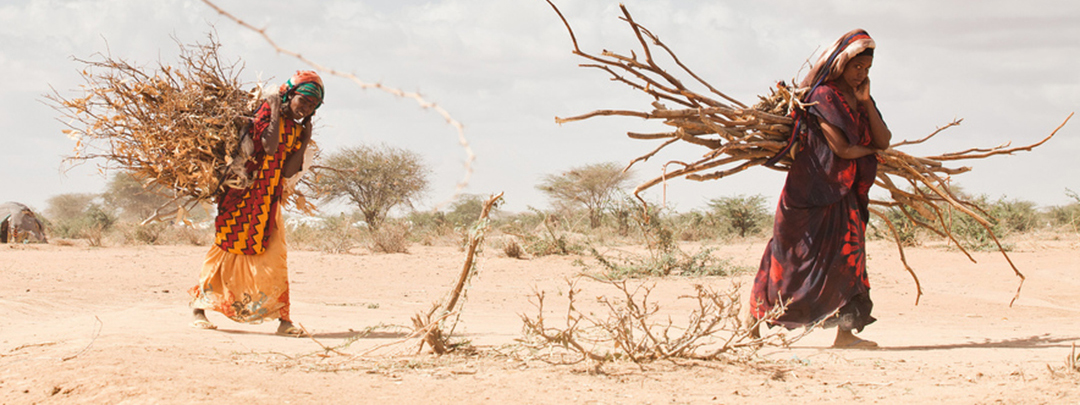
This report provides an assessment of lessons learned from a pilot project in Borana Zone, Oromia National Regional State, Ethiopia, that tests that proposition. Since 2014, the Peace Centers for Climate and Social Resilience (PCCSR) project, funded by the United States Agency for International Development (USAID) and implemented by the College of Law of Haramaya University, has undertaken collaborative activities in pastoral communities in three districts (woredas) in Borana Zone to address community vulnerabilities to climate change and improve communities’ capacity for conflict prevention, mitigation and resolution (PMR).
The relationship between climate change and conflict is increasingly being recognized as an emergent risk in international policy fora. However, a nuanced understanding of the climate– conflict nexus and the role of institutional change has been difficult to integrate into donor programming, due in part to organizational compartmentalization. In places like Borana—poor, rural areas with weak or flawed governance—climate adaptation will be suboptimal or impossible without conflict PMR, and conflict PMR will be suboptimal or impossible without serious attention to climate threats and climate adaptation.